Natural Dyes and the 2026 Wardrobe: How Belgian Heritage and Bio-Chemistry are Ending Toxic Fashion
The textile industry hides a significant environmental burden beneath the vivid shades of our garments. According to the Belgian Federal Public Service Health, the destruction of unsold textiles in Europe currently generates approximately 5.6 million tonnes of CO2 emissions each year. This climate footprint is approximately equivalent to putting one million additional petrol cars on the road annually. Building a truly sustainable wardrobe in 2026 now goes far beyond simply buying fewer items; it requires thoroughly scrutinizing how our clothes are colored. As synthetic dyes and chemical runoff face regulatory scrutiny across the continent, the entire fashion ecosystem is undergoing a major structural shift. The future of our closets lies in replacing synthetics with natural, bio-engineered alternatives that are legally compliant and ecologically sound.
Key Takeaways
- Regulatory enforcement: The Ecodesign for Sustainable Products Regulation (ESPR) requires textile brands to publicly report the number, weight, and reasons for the destruction of unsold stock.
- Belgian scientific leadership: The Royal Institute for Cultural Heritage (KIK-IRPA) is a partner in the European Colour4CRAFTS consortium, contributing expertise in historical textiles and natural dye analysis.
- Biotech scalability: Organizations like PILI are utilizing industrial fermentation to scale up natural dyes without facing the severe land and resource constraints of traditional agriculture.
- Craft and mental wellbeing: The necessary shift toward natural materials encourages hands-on textile crafts, and the Colour4CRAFTS consortium is investigating how natural materials and craft practice may support mental wellbeing.
Why Does the 2026 Wardrobe Need a Color Detox?
The immense volume of textile waste transforms the passive act of buying a heavily dyed, fast-fashion t-shirt into a direct contribution to an unsustainable waste cycle. The era of unchecked overproduction is ending rapidly due to strict new legal frameworks targeting environmental accountability.
Under the current Ecodesign for Sustainable Products Regulation (ESPR), for unsold products companies must publish an annual report on their website giving the number, the weight of the destroyed products, and the specific reasons for their destruction (Belgian Federal Public Service Health). This stringent mandate creates a profound transparency shift for the sector. Brands can no longer quietly incinerate unsold, synthetically dyed inventory without public and regulatory backlash.
From Compliance to the Closet
For the modern consumer, these new reporting regulations mean that adopting a sustainable wardrobe is a practical response to a legally shifting market. As brands optimize their production pipelines to comply with ESPR regulations, the base materials and colorants they use must inherently evolve. The legislative pressure to minimize environmental impact at every stage is forcing a pivot away from conventional colorants, carving out crucial market space for a renaissance in natural and bio-based dyes that align with the EU's aggressive anti-waste targets.
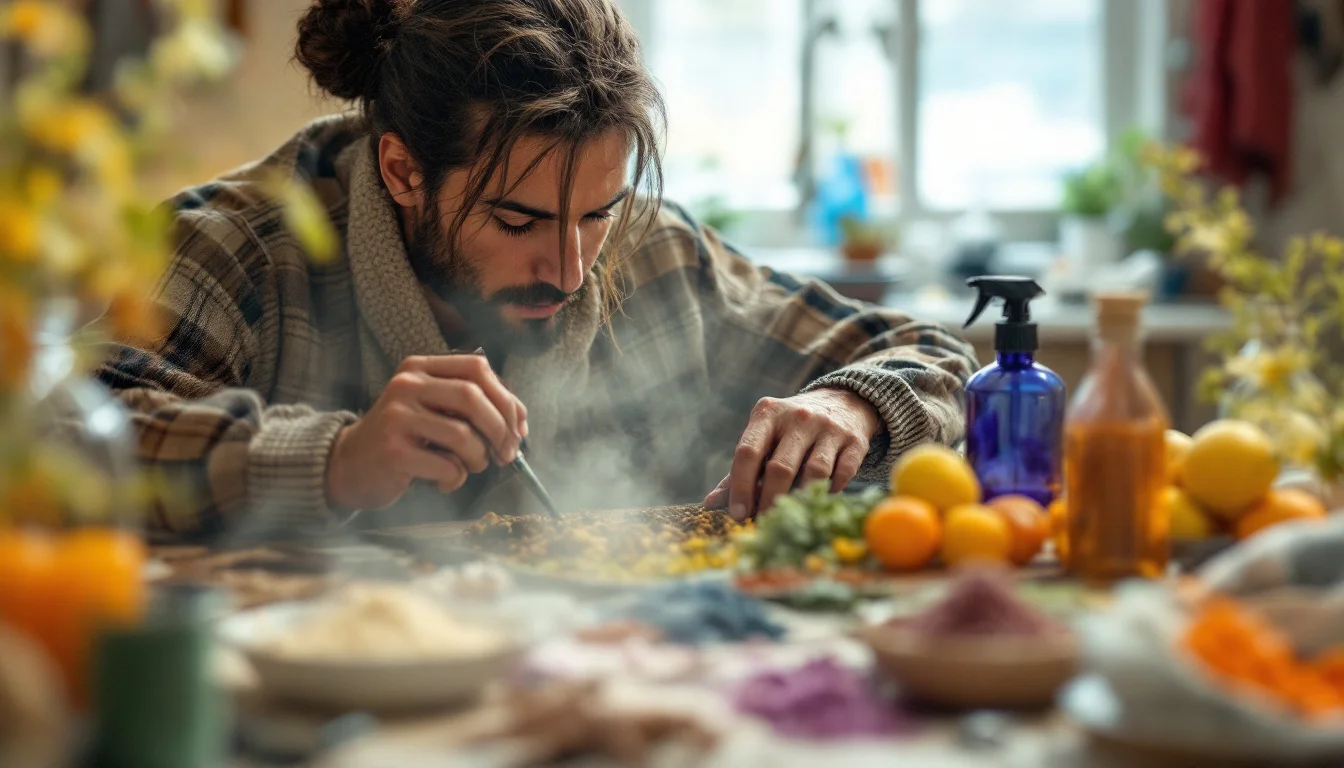
This shift away from disposable fashion also encourages a deeper, more personal engagement with our textiles, such as repairing or naturally over-dyeing older garments at home. The Colour4CRAFTS project notes that participating in knitting, crocheting, and embroidery has always had strong links with mental wellbeing and health, and asks how individual health would be enhanced by using natural materials and craft technology. By moving away from an alienated consumption model, individuals reclaim personal agency, and researchers are actively investigating how engaging with natural materials might foster mindfulness and reduce daily stress.
How Is Belgium Leading the Colour4CRAFTS Mission?
At the intersection of historical heritage and futuristic science, the Colour4CRAFTS initiative operates as a central engine for this textile transition. Colour4CRAFTS is a Horizon Europe-funded consortium project. It combines the cultural traditions of dyes and textiles with the development of novel dyeing techniques and bio-based dyes using state-of-the-art technology (Colour4CRAFTS, "About," 2026).
Belgium holds a critical position in this pan-European scientific effort. The country is represented in the natural-dye research consortium by the Royal Institute for Cultural Heritage (KIK-IRPA – Koninklijk Instituut voor het Kunstpatrimonium – KIK). The institute is one of the project's partner organisations, alongside the University of Helsinki (consortium leader), the University of Lapland, the University of Tartu, and the University of Leeds (Colour4CRAFTS, 2026).
Mining the Past for Future Tech
KIK-IRPA brings strong expertise in historical textiles to the modern laboratory. The consortium uses extraction methods, chromatographic separation, and UV/VIS and mass spectroscopic detection to identify dyestuff origins and build a library of dyes that may have been used in traditional dyeing processes throughout Northern Europe (Colour4CRAFTS, 2026). This historical knowledge allows researchers to study natural dye compounds and their properties. This Belgian institutional backing indicates that the shift toward sustainable wardrobes relies on rigorous scientific validation of historical practices. The institute's active involvement supports the goal that resulting bio-dyes are not just eco-friendly in theory, but are deeply rooted in long-lasting textile heritage.
How Do Natural Colors Actually Work?
Understanding a sustainable wardrobe requires looking closely at how natural colors are biologically sourced and physically applied. According to a Tunisian study published in the Journal of Textile Engineering & Fashion Technology (JTEFT, 2024), natural dyes are extracted directly from the natural environment. These raw sources are categorized into several distinct biological groups: plants (such as indigo and saffron), insects (such as cochineal and lac bugs), animals (including certain species of mollusks or crustaceans), and minerals (such as ferrous sulfate, ochre, and clay).
The Mechanics of Traditional Dyeing
Transforming these raw natural materials into vibrant, wearable garments is a highly technical, multi-stage craft. The JTEFT study outlines that dyeing textiles with natural dyes involves several distinct steps to ensure quality and colorfastness:
- Mordanting: Treating the fabric with a specific substance that allows the dye to bind effectively to the fibers.
- Preparing the dye liquor: Extracting or solubilizing the active dye from the natural source into a liquid bath.
- Exhaustion: Ensuring the dye fully permeates the internal matrix of the fabric.
- Diffusion and migration: Allowing the dye to spread evenly across the entire surface of the textile.
- Fixation: Setting the dye so it adheres permanently to the fabric, resisting fading.
Can Bio-Fermentation Bridge the Gap Between Craft and Retail?
While extracting colors directly from plants and minerals works beautifully for small artisanal runs, scaling these exact methods to supply millions of European wardrobes presents a massive logistical hurdle. Natural dyes are described in the 2024 JTEFT study as a revival of a rich tradition rather than an innovation. Crucially, they are not comparable to synthetic dyes in terms of efficiency for industrial applications. Relying solely on agricultural land to grow vast fields of indigo or madder to meet global textile demands remains ecologically unfeasible.
This efficiency gap is exactly where advanced biotechnology intervenes. PILI, one of the Colour4CRAFTS consortium partners, develops entirely new routes to dyes using industrial fermentation and green chemistry (Colour4CRAFTS, 2026). Modern science utilizes engineered microorganisms to literally brew color. This bypasses the need for intensive agricultural yields while completely avoiding synthetic petrochemicals.
Dye Technologies Compared
| Dye Category | Source Origin | Industrial Efficiency |
|---|---|---|
| Traditional Natural | Extracted from plants, insects, minerals, and mollusks | Low; highly constrained by agricultural limits and not comparable to synthetics industrially (JTEFT, 2024). |
| Bio-Engineered | Cultivated via green chemistry and industrial fermentation | High; scales up successfully without requiring mass agricultural land (Colour4CRAFTS, 2026). |
| Conventional Synthetic | Derived from petrochemicals and fossil fuels | High; but fundamentally incompatible with incoming EU anti-waste regulations. |
Through the pioneering work of organizations like PILI, the fashion industry is building a bridge between the historical heritage studied by KIK-IRPA and the high-volume demands of modern retail. Industrial fermentation offers a scalable alternative that maintains the environmental profile of ancient natural dyes.
FAQ: Navigating Sustainable Textile Standards
Are bio-based dyes as colorfast as synthetic dyes?
Achieving high colorfastness with natural dyes is entirely possible, but it requires a precise, multi-stage biochemical process. According to the 2024 JTEFT study, setting natural dyes involves mandatory steps like mordanting (to help the dye bind to fibers) and fixation (to ensure the dye adheres permanently and resists fading). While this demands more technical control than simply using conventional synthetics, the study notes that natural dyes cannot be compared to synthetic dyes in terms of efficiency for industrial applications, meaning that colorfastness performance remains a key technical challenge the field is actively working to address.What specific sources were historically used to achieve primary colors in Europe?
Before the invention of synthetic petrochemical alternatives, European textile coloration relied on precise knowledge of plant, insect, animal, and mineral dyes. The 2024 JTEFT research cites Haddar in noting that until the end of the 19th century, fabric dyeing relied heavily on specific plant sources, such as blue extracted from woad (pastel), red extracted from the roots of the madder plant, and yellow sourced directly from weld.Conclusion: Decoupling Color from Carbon
The transformation of the modern wardrobe relies on establishing a delicate balance between moving away from the industrial habits of the past century and fully embracing the sophisticated green chemistry of today. Bio-based color only decouples fashion from carbon if fermentation capacity and reporting enforcement hold—and if brands accept the technical processes traditional dyes still require. By replacing petrochemicals with advanced bacterial fermentation, the European fashion sector is demonstrating how aesthetic vibrancy can align with ecological goals. The colors we ultimately choose to wear moving forward may serve as quiet indicators of this structural shift, linking 19th-century botanical heritage with cutting-edge bioprocessing.